

Introduction
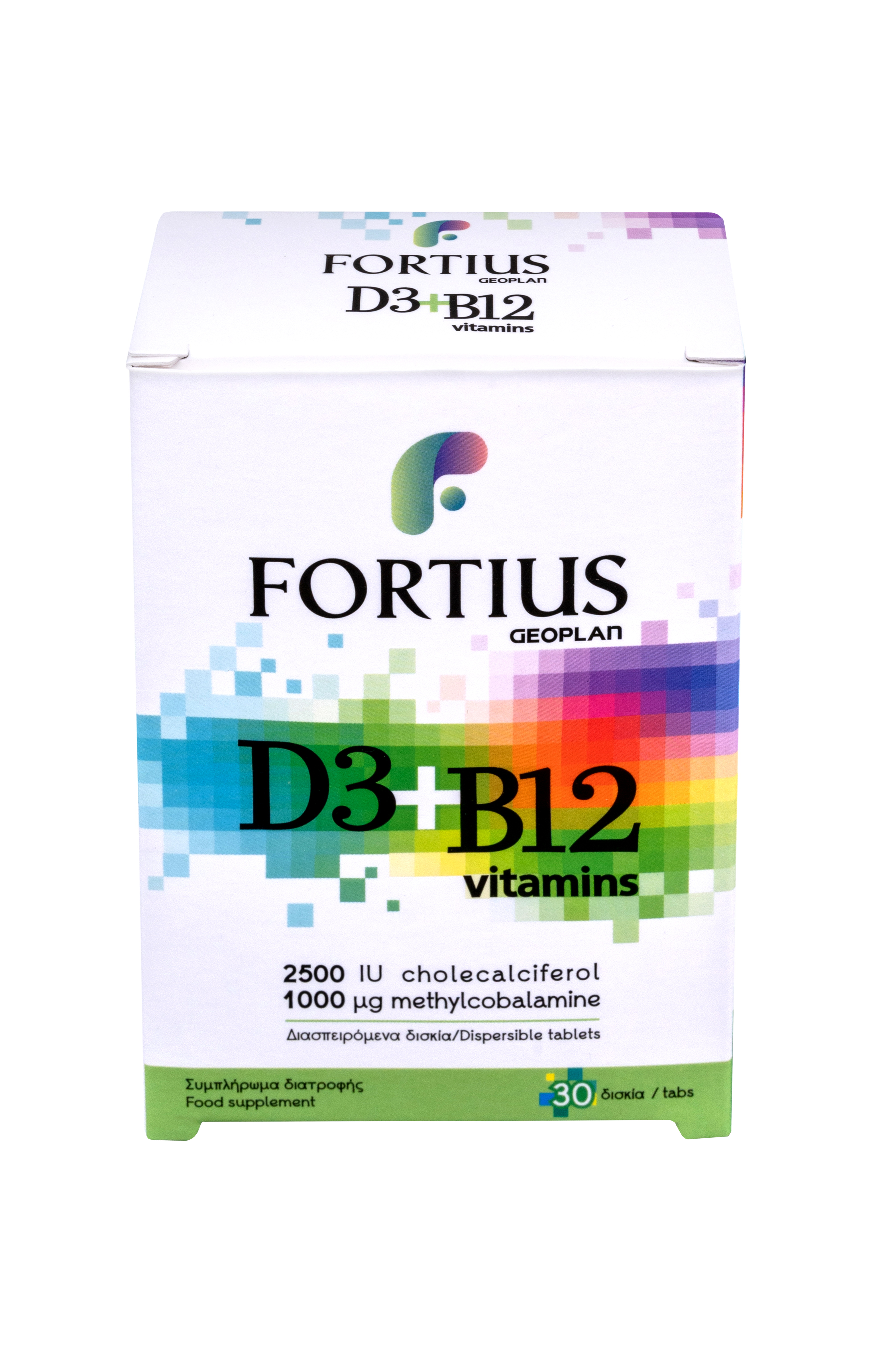
FORTIUS D3+B12 is a nutritional supplement with vitamins D3 and B12. These are vitamins of great importance for the proper functioning of the body, but their lack or insufficiency often occurs for many reasons.
FORTIUS D3+B12 is in the form of dispersible tablets. Absorption is sublingual from the oral mucosa bypassing the digestive tract.[1,2] For this reason, it is readily absorbed and acts faster. Moreover, it has easy intake (spread in the mouth) and pleasant taste.
The form of vitamin D used in FORTIUS D3+B12 is D3 (cholecalciferol) as it has much better absorption by the body compared to D2.[3] For the same reason, methylcobalamin has been used as the best source of absorption of B12.
Composition
Ingredients Amount per Serving (1 tab) % N.R.V.*
Vitamin D3 (cholecalciferol) 2500 IU (62,5 μg) 1250
Vitamin B12 (methylcobalamine) 1000 μg 40000
*N.R.V.: Nutrient Reference Value
Serving size: 1 tab / Servings per Container: 30
Does not contain: Gluten, artificial colors, lactose, preservatives
Vitamin D3
According to a recent study, 73% of Greeks and 69% of Cypriots have insufficient levels of vitamin D.
*Xyda SE et al, The prevalence of Vitamin D deficiency in a Greek and a Cypriot population sample. Endocrine Abstracts (2018) 56 P212.
Vitamin D, through its receptors, interacts with more than 2000 genes in the human body which in turn encode proteins that play an important role in regulating, differentiating and propagating cells.
Cholicalciferol (D3) is the natural form and increases the levels of total vitamin D more effectively.
According to the European Food Safety Authority (EFSA), vitamin D3 contributes to
normal absorption of calcium and phosphorus resulting in strong bones, muscles and teeth
reduce inflammation
setting and strengthening the immune system
maintaining muscle strength
controlling blood sugar
it plays an important role in the pathogenesis of autoimmune diseases, such as multiple sclerosis, type 1 diabetes, rheumatoid arthritis, psoriasis, celiac disease, Crohn’s disease.
Groups of people with common vitamin D deficiency
Vegetarians
Elderly
Persons with limited sun exposure and urban residents
People with bone diseases
Athletes
People with chronic diarrheal syndromes and inflammatory bowel diseases
People with respiratory infections
Diabetes
Pregnant and breastfeeding women
Multiple Sclerosis
Vitamin Β12
A water-soluble vitamin of the B complex that is involved in the metabolism of every cell of the human body.
Methylcobalamin is the most active physical form of vitamin B12.
The tablets are dispersed in the oral cavity, pass immediately and easily into the bloodstream resulting in maximum absorption of B12 from the body.
According to the European Food Safety Authority (EFSA) vitamin B12 plays a key role
in DNA synthesis
in metabolism of homocysteine
Contributes to
good functioning of the nervous system
good functioning of the immune system
normal formation of red blood cells
reducing of tiredness and fatigue
Groups of people with common vitamin B12 deficiency
Megaloblastic anemia
Elderly and depressed people
Vegetarian diet
Alzheimer’s disease
Contraceptives
Diabetes and patients taking metformin to regulate blood glucose levels
Digestive disorders and patients taking medication for gastric or peptic ulcers
Inflammatory Bowel Diseases
Low bone density
 Homeopathy & Veterinarian


